Showing posts with label HEALTH. Show all posts

May 5, 2011

Cyclists Rally for Cervical Cancer Prevention

How far would you go to save 500 women?

For the dedicated cyclists of the upcoming “Tour of Hope 2011 - 500: Going the Xtra Mile Against Cervical Cancer,” it will take 500 kilometers in 5 days. They will undertake the challenging 5-day journey from Manila to Laoag in order to help raise funds for cervical cancer prevention vaccination drives and seminars.

      “What makes this year’s Tour of Hope different is that we are going to vaccinate a total of 500 women during the tour,” explains Abbygale Arenas-de Leon, Bravehearts president. “We wanted the tour to be more than just a way to spread awareness about cervical cancer prevention. We hope this will inspire more women to take action against this deadly but preventable disease.”

Bravehearts President, Abbygale Arenas-De Leon,sharing
several facts and statistics about cervical cancer
before discussing the goal of The Tour of Hope 2011

     Recently, the exciting details of the biggest anti-cervical cancer were revealed at the official launch of this year’s Tour of Hope, which was organized by Bravehearts in partnership with Team David’s Salon and GlaxoSmithKline. The event was held at R.O.X., the biggest outdoor sports and recreation hub in Southeast Asia and hosted by celebrity athlete Tricia Chiongbian-Concepcion, who will also be cycling to help save women from cervical cancer in the Tour of Hope.
Celebrity athlete, Tricia Chiongbian-Concepcion, hosting the media launch of The Tour of Hope 2011.

     In a country where cervical cancer claims the lives of 12 women everyday, the need to fight this disease has only become more urgent over the years.

     “I would like to encourage women to be screened for cervical cancer regularly,” said Dr. Cecilia Llave, Program Director of the Cervical Cancer Prevention Network (CECAP). “The disease is treatable through early detection. In fact, not only is it treatable, it can also be avoided by living a healthy lifestyle and getting vaccinated.”
 
Since The Tour of Hope started in 2008, it has generated approximately Php 2 million through sponsorships and pledges. These were then used for cervical cancer screening programs and lectures with the Cervical Cancer Prevention Network (CECAP).

     However, if you think that The Tour of Hope is all about the bikers, think again. Over the past two years, the event organizers have formed partnerships with local government units such as those of Tarlac, Dagupan, Pampanga, La Union, and Baguio in order to conduct lectures during each stopover of the tour to local communities with marginalized groups who display poor health-seeking behavior.

What’s in Store for The Tour of Hope 2011
     Aside from the challenging journey, The Tour of Hope has always been known for bringing its participants to scenic locations such as Vigan, Zambales, and Camarines Sur. This year is no exception. The Tour of Hope 2011 - 500: Going the Xtra Mile Against Cervical Cancer will kick off at the TriNoma Mall in Quezon City on May 28, 2011. 

The Tour of Hope Bikers

     The first stop will be at Tarlac City, Tarlac. It is the home of President Noynoy Aquino’s ancestral house and Mount Pinatubo, where adventure-seeking 4x4 wheel drivers try their skills, and hikers visit the crater. The tour will then continue to San Fernando, La Union, where the renowned La Union Botanical Gardens is located. Afterwards, the bikers will head to Vigan City, Ilocos Sur, where historical churches and ancestral homes that reflect the beauty of old world architecture can be found. The fourth stop will be Laoag City, Ilocos Norte, where tourists often visit the Juan Luna Shrine. There, visitors can get a glimpse of the award-winning Spolarium painter’s life through vintage photographs and household artifacts. The final stop for this year’s Tour of Hope is Paoay, where bikers will get to see the unique blend of Spanish, Chinese, and architecture represented by Paoay Church, which is a UNESCO World Heritage Site.

     The last leg of the tour will feature celebrity bikers such as Commissioner Gregorio Larrazabal, Marvin Kiefer, Rovilson Fernandez, Troy Montero, Aubrey Miles, Will Devaughn, Richie Hardin, Richard Herrera, Janna Victoria, Gem Padilla, Anthony Pangilinan, and David Charlton. They will be lending their star power to draw attention to a good cause. In addition, Tessa Prieto-Valdes is currently working on a special project that will also help raise funds for cervical cancer prevention.
 

As part of the preparations for the upcoming Tour of Hope, there will also be a Mini Tour of Hope that will be held on May 7 at Filinvest, Alabang. This is a great way for biking enthusiasts to show their support for the anti-cervical cancer advocacy, and everyone is invited to join.

     “On behalf of Bravehearts, I’d like to encourage everyone to join the fight against cervical cancer,” Abbygale Arenas-de Leon said. “For all the women, do it for your families and loved ones. And for all the men, I encourage you to support the cervical cancer prevention advocacy for your mothers, sisters, and daughters. With your help, thousands of lives can be saved.”


Bravehearts presents the Tour of hope


Bravehearts is a non-profit organization initially led by the Cervical Cancer Prevention Network (CECAP) for the Cancer Institute Foundation (CIF). It is dedicated to raising awareness on cervical cancer prevention and is supported by a growing number of women, including prominent personalities such as Abbygale Arenas-de Leon, who is the current president of the organization, Senator Loren Legarda, Pia Magalona, Ellen Tordesillas, Tessa Prieto-Valdes, Jeena Lopez, Maimai Davao, Joyette Jopson, and Suzi Entrata. For further inquiries, please email braveheartsphilippines@gmail.com. To be a part of The Tour of Hope 2011 – 500: Going the Xtra Mile Against Cervical Cancer, please email Joyette Jopson at joyette.jopson@gmail.com or contact her at 0917-8827352. 


March 7, 2011

How to fight your child's fever

Fever is common in young children. It is the body’s natural defense against infections.  When your child has an infection, your child’s body will activate its immune system and raise its temperature above normal to fight it. The normal range of body temperature at the armpit is between 34.7°C and 37.4°C. If the temperature rises above 37.5°C, it is considered a fever.


If you have young children, it is best to always have a digital thermometer handy in your home.  Due to the potential for mercury exposure or ingestion, glass mercury thermometers have been phased out and are no longer recommended.

See the doctor immediately if your child:

    * Has a convulsion

    * Is difficult to awaken

    * Has difficulty swallowing, feeding or drinking

    * Is sitting quietly and the fontanelle (soft spot in the top of the head) is bulging

    * Has signs of dehydration

    * Is listless or irritable, has a very bad headache or stomachache, vomits repeatedly or has any other symptoms causing significant discomfort

    * Has a temperature of 39 C or higher (or 38 C for children less than 3 months)

    * Has a fever lasting more than 3 to 5 days

    * Cries if you touch or move him or her

    * Has redness, swelling or tenderness around the eye, arm or leg

    * Walks with a limp or refuses to move a leg or arm

    * Has difficulty breathing even after his nose is cleared

    * Has purple spots on the skin that do not blanch (turn white) when pressed firmly

Also consult the doctor if:

    * You are worried about the child’s condition

    * You feel that you are unable to care for the child

When it comes to fever relief, UBM Medica explains that Paracetamol is one of the safest and most commonly used over-the-counter (OTC) medicines. 

The correct dose of Paracetamol does not depend on the child’s age, but on his weight. The optimum dose of Paracetamol is 15 mg per kilogram.   In other words, if your child weighs 10 kg he should be given 150 mg Paracetamol per dose. This dose should be given once every 4 – 6 hours, up to 4 times per day if needed.  Remember that ‘mg’ is a measure of weight and ‘mL’ is a measure of fluid volume.  For your convenience and to ensure your child gets the right amount of medication for his fever, children’s Paracetamol (Calpol) provides a weight-based dosage table on the bottle and box labels for your easy reference.
Pediatricians agree, weight based dosing of Paracetamol is always the right way to go to fight your child’s fever.


January 22, 2011

Cervical Cancer Vaccination


Cervical Cancer is the second leading cause of cancer death for women in the Philippines. Everyday, almost 12 Filipino women die of cervical cancer. The scary thing is it often has no signs or symptoms. More than half of those diagnosed with cancer die in 5 years.

Every women is at risk. 

Cervical Cancer is caused by a virus known as HPV - Human Papilloma Virus.  It can be easily transmitted. It can occur even in women who never had sexual intercourse in their life. 

The good news is It can be prevented. There's now a vaccine that can protect us from the disease.


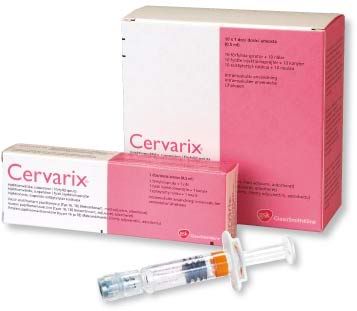
It's a bit pricey compared to other type of vaccines, but its worth it. It costs around 4,500 pesos for 3 shots. I just had my second shot last night. You may experience a little pain and swelling in the injection site although not everybody will feel it. Aside from those short-term effects, there have been no reports that Cervarix vaccine is associated with any serious risks.  


December 7, 2010

Warts Happening? - Campaign against HPV-genital warts

To support the campaign against HPV-Genital Warts, a special script reading session and blogger's forum event was held last Friday December 3, 2010.

"Hosts Slick Rick, Tony Toni and Sam YG of Magic 89.9 delighted the audience with their peculiar conversations at the MSDs “Look Who’s Talking? The Genital Dialogues”


"Dr. Jennifer Co, OB-GYN infectious Disease Consultant of FEU-Nicanor Reyes Memorial Foundation Medical Center and Jose Reyes Memorial Medical Center, talks about the risk, threats and protections from HPV."


To educate us further here are some  facts regarding HPV and Genital Warts.


Wart’s happening?
How to deal with genital warts and avoid getting them in the first place


The increasing number of HPV related cases is very alarming. Imagine, every year, about 32 million people are infected with the disease.

In most cases, HPV infections go untreated, because majority of them would not even know they have it since there are no symptoms. Most HPV infections will be cleared by the body's immune system but for those that persist, certain HPV-related diseases may develop such as genital warts.


What are genital warts?
Also known as venereal warts, genital warts are caused by certain types of HPV.

In men, warts manifest on the penis, especially under the foreskin in uncircumcised men, or in the urethra.

In women, they occur on the vulva, vaginal wall, cervix, and skin around the vaginal area.
Genital warts may also develop in the area around the anus and in the rectum, especially in people who engage in anal sex.

While some HPV types may cause genital warts, other HPV types may cause cervical cancer as well as the less common but serious cancers of the vagina, vulva, penis, anus, and head and neck (tongue, tonsils and throat).


How is HPV-genital warts transmitted?
It can be transmitted through sexual intercourse, oral sex, or even mere skin-to-skin contact of the genital area (non-penetrative sex).

Warts usually appear one to six months after contact with an infected partner (even if the infected partner has no signs and symptoms), starting out as tiny, soft, moist, pink or gray growths. They develop rapidly and become rough, irregular bumps, which sometimes grow out from the skin on narrow stalks. Warts often grow in clusters with their rough surfaces making them look like a small cauliflower.

Warts are highly transmissible - more than 75% of people coming into contact with genital warts develop the disease.

Condom use does not guarantee total protection as condoms do not cover all areas that may be infected by HPV during sex.
 

Mutual monogamy, on the other hand, effectively reduces the risk of infection. However, even people with only one lifetime partner can still get HPV if their partner has had previous sexual relations.
If left untreated, warts may either go away, remain unchanged, or increase in size and number. In some cases, however, warts can be difficult to treat because of episodes of recurrence.


How can i prevent the disease from occurring?
Abstinence.  This involves abstaining not only from penetrative sex, but from oral, genital-to-genital, and hand-to-genital contacts or non-penetrative sexual acts as well.

Once you suspect having genital warts, immediately seek medical advice. It is best to consult your doctor for them to rule out any possible serious health problem, and for the doctor to advise you on treating and managing the disease.

You should also have your partner examined for HPV-related diseases and treated accordingly.

Improve immunity. A healthy immune system often clears HPV and stops it from causing symptoms or health problems. One way to help boost immunity against HPV is through vaccination.

It can be availed of only upon the prescription of a doctor. It does not treat existing genital warts, cervical, and vaginal cancers.

It is delivered in 3 separate intramuscular injections over six months. Women should avoid pregnancy during the course of the vaccination.
To know more about genital warts and HPV prevention, consult your doctor and visit www.helpfighthpv.com.

November 8, 2010

Are Vaccines that important?


   My son just had his first dose of rotateq vaccine yesterday.  Its a vaccine that helps prevent rotavirus gastroenteritis, and not like any other vaccines it is given orally. Its a bit expensive as it cost around 3,800 for just a single dose.

   Regardless of the cost, i still consider getting  my children vaccinated. Although it doesn't guarantee complete protection from a disease, still, its considered as an advantage.

   According to studies, vaccines are proven to be highly effective in strengthening the child's immunity and in preventing life threatening diseases like pneumonia and meningitis. And it doesn't just save lives but it saves money as well. Just imagine the money you can save from medicines, doctor's visits and hospital bills. It surely is a good investment.
   Here in our country, getting immunized is highly encouraged by health professionals. That's why recommended vaccines (BCG, DPT, OPV, Hep B) are available at our local health centres for free. So why not take advantage of that? Besides, prevention is better than cure, right?